
How to Reduce Excessive Barking Without Punishment
If you’re living with a dog who barks at every noise, loses their mind at the doorbell, or starts barking the moment you leave the house, you’ll know how exhausting it can become.
But barking isn’t a character flaw.
Barking is communication.
Dogs bark for different reasons - excitement, frustration, fear, anxiety, anticipation, or simply because barking has worked for them before.
So rather than asking:
“How do I stop my dog barking?”
A better place to start is:
“WHY is my dog barking?”
Because the answer changes what we do about it.

Dog bark for a variety of reasons
5 things I look at with excessive barking
1.Stop them practising it all day
If your dog spends hours barking through the window at every person, dog or delivery van that passes, they’re getting LOTS of practice.
Management matters.
That might mean blocking access to certain windows, moving furniture, using gates or changing where your dog spends time.
It isn’t avoiding the problem.
It’s stopping your dog rehearsing the behaviour while you work on changing it.
2. Look at your dog’s needs
A dog who doesn’t have appropriate outlets for physical activity, sniffing, exploration, chewing, play and rest may find it harder to settle.
That doesn’t mean exhausting them until they’re too tired to bark.
Look at the individual dog in front of you.
Are they getting opportunities to sniff and explore? Do things they enjoy? Use their brain? Rest properly?
Sometimes we focus so heavily on the behaviour we dislike that we forget to look at the dog’s life as a whole.
3. Teach them what to do instead
Repeatedly shouting “QUIET!” tells your dog very little about what you actually want.
Instead, teach useful alternative behaviours when nothing exciting is happening.
That might include:
Going to a bed or mat and settling
Searching for scattered food
Disengaging from something and returning their attention to you
Relaxing while everyday things happen around them
Practise these skills before you desperately need them.
Trying to teach your dog to settle for the first time while the Amazon driver is hammering on the door is making life unnecessarily difficult for both of you.
4. Work out what triggers the barking
Start noticing what happens before your dog barks.
Is it people passing the window?
A particular noise?
Dogs outside?
Someone approaching the house?
Being left alone?
Waiting for dinner?
Once you spot patterns, you can start working on the actual trigger rather than treating every type of barking as the same problem.
And that’s important because not all barking needs the same training plan.
5. Train the specific trigger
Once you know what sets your dog off, you can work on that trigger specifically.
A dog barking at people through the window may need a different approach from a dog barking at the doorbell, barking from frustration, or barking when left alone.
Start at a level your dog can cope with and gradually work from there.
For example, if a particular sound triggers barking, introduce it quietly enough that your dog notices it without immediately launching into full-volume commentary.
Pair it with something positive, reward calm responses and gradually build up as your dog becomes more comfortable.
The aim isn’t simply to interrupt the barking.
We want to change what happens when your dog encounters the trigger in the first place.
Doorbell barking, for example…
If the doorbell sends your dog into orbit, teach the behaviour you want separately first.
You might teach them to go to a bed or designated area and build plenty of value for being there.
Then introduce an unrelated sound at low intensity:
Sound → go to place → reward.
Once your dog understands the pattern, gradually introduce the actual doorbell at a level they can cope with.
Eventually the doorbell becomes information:
“Someone’s there - I know what to do.”
Rather than:
“SOUND THE ALARM, AVERIL. WE’RE UNDER ATTACK.”
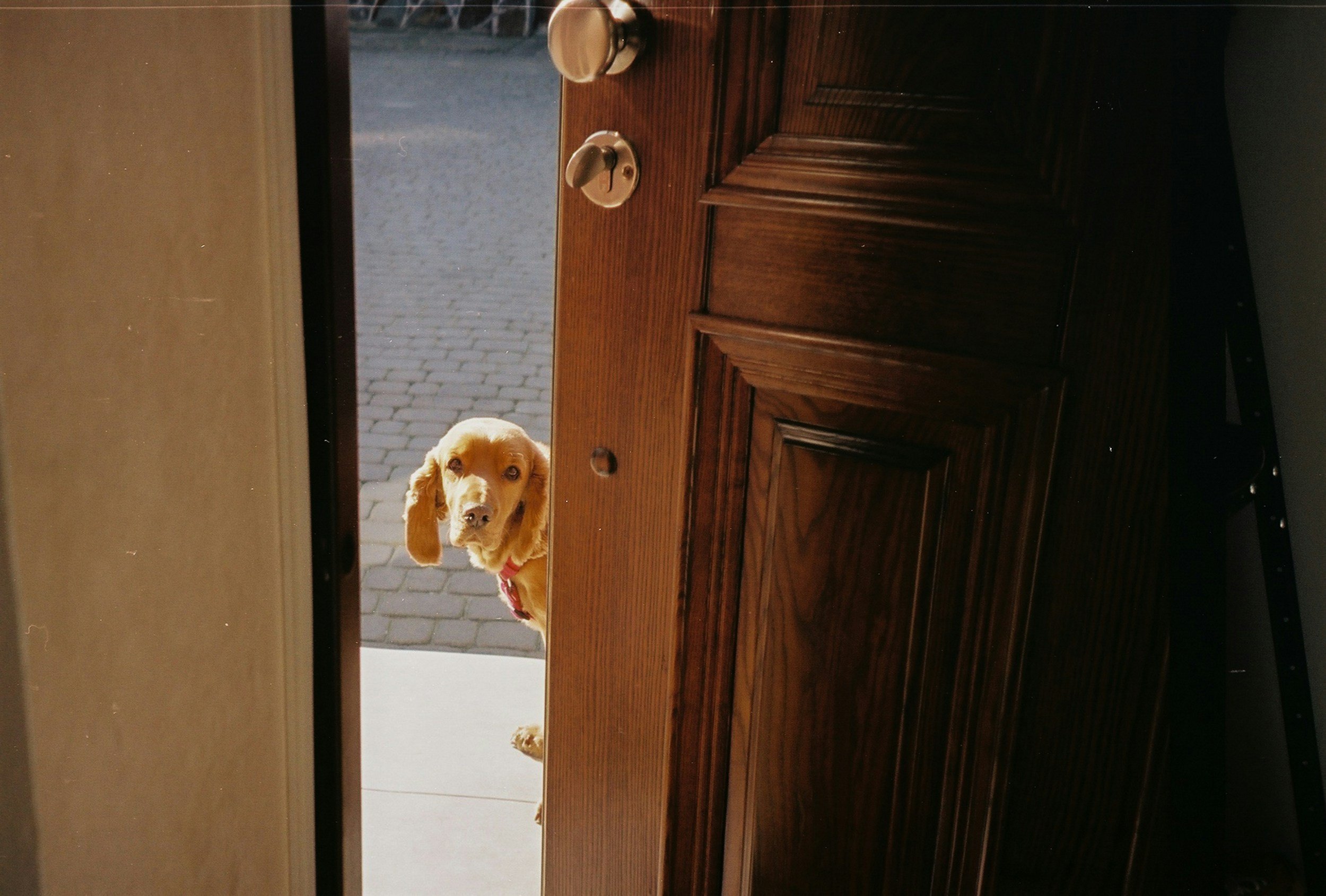
Teach your dog what you want them to do instead
What if my dog barks when I leave?
This needs treating differently.
Barking associated with being left alone can have an emotional component, and a dog experiencing genuine distress needs more than a “quiet” cue.
If your dog panics when left, avoid repeatedly putting them into situations where they become highly distressed while you’re trying to address it.
Rule out medical issues where appropriate and seek qualified professional help if you’re concerned about separation related behaviour.
Distress isn’t disobedience.
What about bark collars, shouting or punishment?
They might interrupt barking.
But interrupting the noise isn’t necessarily changing why the dog was barking.
If a dog is frightened by something outside and barking makes something unpleasant happen to them, we’ve potentially added another problem rather than solving the original one.
I’d much rather work on the reason for the behaviour, prevent unnecessary rehearsal and teach the dog something appropriate to do instead.
Measure progress differently
The goal doesn’t have to be a dog who never barks.
Dogs bark.
Instead, look for:
Shorter barking episodes.
Faster recovery.
Easier disengagement.
More appropriate choices.
A dog who copes better with their triggers.
Those are meaningful changes.

Teaching your dog what you want them to do instead, helps them make good choices.
Final thought
If barking is driving you mad, don’t start by asking how to silence it.
Start by getting curious about it.
What happens before it?
What does your dog get from doing it?
How are they feeling?
And what would you rather they did instead?
Once you understand those things, you’ve got something useful to train.
And if the barking is intense, worsening, associated with fear or distress, or you’re simply struggling to manage it, get individual professional help.
Because sometimes barking isn’t the problem.
It’s the bit of the problem we can hear. 🐾