
I worked with a client who came to me for help because their dog was pulling on the lead.
As always, we started with a conversation about what was happening, how it was affecting their walks and what they hoped to achieve.
I also asked them to complete a questionnaire so I could get as full a picture as possible of their dog’s lifestyle, behaviour and anything else that might be contributing to the problem.
I work hard to build trust with my clients. I’m not interested in judging what has happened before someone comes to me. We all make decisions based on the information we have at the time.
But in return, I need clients to be honest with me. The more I know, the better I can understand what may be influencing their dog’s behaviour.
After three sessions, we weren’t seeing the progress I would normally have expected.
I knew my client was doing the work. They had sent me multiple videos showing them practising the exercises, so I was struggling to understand why things weren’t moving forward.
At our next session, we talked about it.
My client seemed uncomfortable and eventually told me something they hadn’t mentioned before.
Earlier that year, they had already been to another trainer for exactly the same problem.
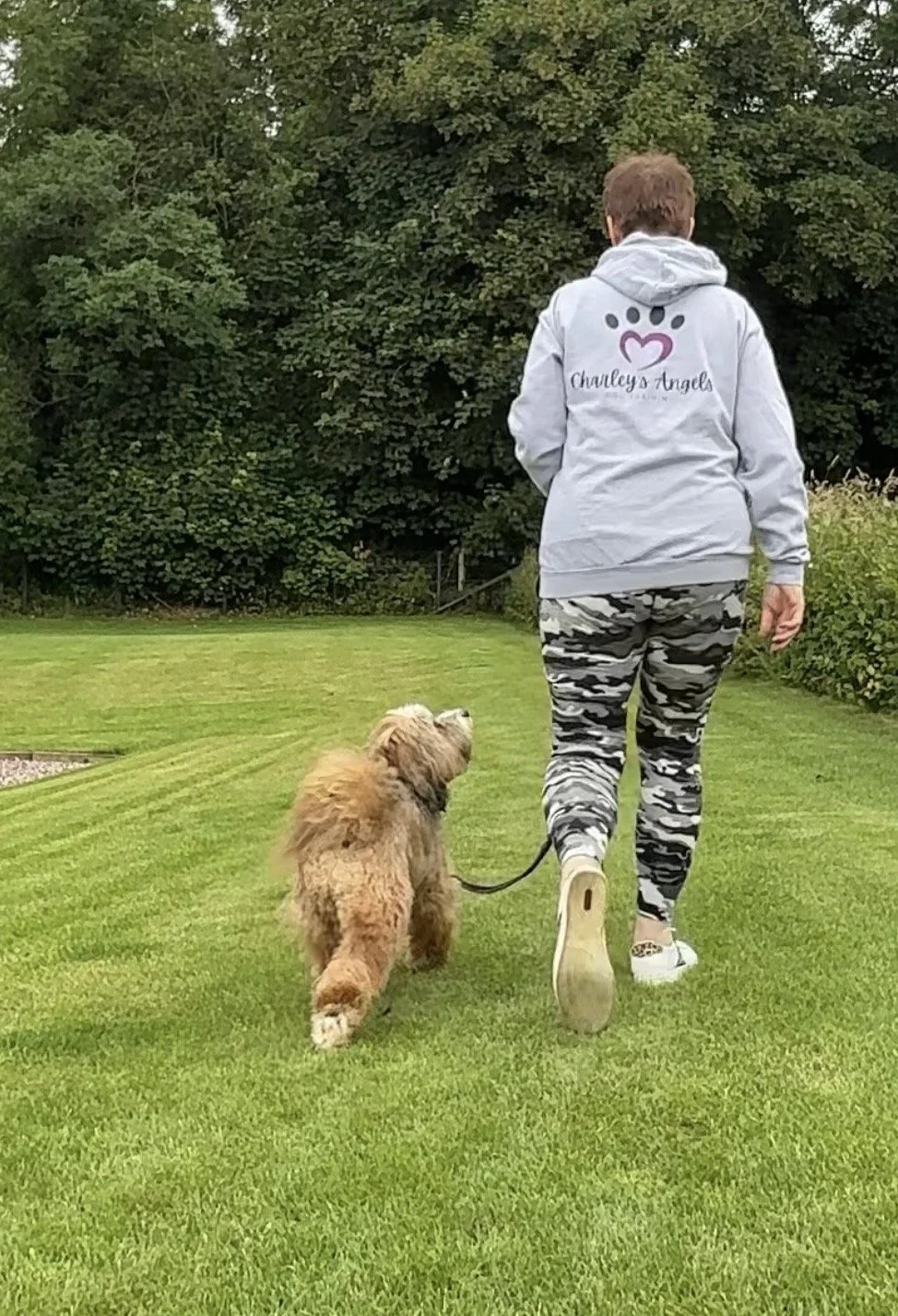
Equipment doesn’t train a dog.
The previous trainer had recommended using a particular type of collar which, they were told, would improve their dog’s lead walking.
They had reservations about using it.
But they were understandably tempted by the possibility of finally being able to have the calm, enjoyable walks they had been dreaming of.
And initially, it appeared to work.
Within two sessions, their dog had stopped pulling.
They were delighted.
So delighted, in fact, that they left the trainer a glowing review telling other dog owners how successful the training had been.
The problem was that the story didn’t end there.
The Behaviour Had Stopped. But Other Things Began to Change.
Over the following weeks, their normally goofy, happy dog became increasingly withdrawn.
They became less interested in sniffing and exploring on walks.
They didn’t pull on the lead though.
At home, they stopped seeking their owners out as much and increasingly chose to take themselves away to a quiet corner.
They didn’t pull on the lead though.
They began barking at sounds that previously hadn’t bothered them.
They didn’t pull on the lead though.
They also started trembling at seemingly random points during the day.
They didn’t pull on the lead though.
The owners became understandably worried.
After several months, they took their dog to the vet because they were concerned there might be an underlying medical problem.
The dog was examined and given a clean bill of health.
Then something happened that made them reconsider the training equipment they were using.
A change in behaviour is always worth paying attention to
The Turning Point
Their dog went out with a local dog walker.
The dog walker saw the collar and told the owners that they weren’t comfortable using it and would not walk the dog wearing it.
That conversation validated the doubts the owners had originally had.
They stopped using the collar and went back to the harness their dog had worn since puppyhood.
But now their dog was reluctant to have the harness put on.
And once they were walking in it again, the pulling returned.
The calm lead walking they thought they had achieved disappeared.
That was when they contacted me.
Stopping Behaviour Isn’t Necessarily the Same as Teaching Behaviour
This is one of the things I think we need to talk about much more in dog training.
It is very easy to look at one behaviour in isolation.
The dog pulled before.
The dog no longer pulls.
Therefore, the training worked.
But did it?
If removing the piece of equipment results in the original behaviour immediately returning, we have to ask what the dog actually learned.
Had they learned how to walk on a loose lead?
Or had they learned that pulling while wearing that particular equipment had consequences they wanted to avoid?
Those are two very different things.
Suppressing a behaviour can sometimes produce an impressive looking result very quickly.
Teaching a dog a new skill often takes longer.
But speed isn’t the only measure of successful training.
Training should support the whole dog
Look at The Whole Dog
When I assess whether training is working, I don’t only want to know whether the behaviour I was originally asked about has changed.
I also want to know what is happening to the rest of the dog.
Are they still:
relaxed?
curious?
sniffing and exploring?
choosing to interact with their owner?
confident in their environment?
willing to engage in training?
behaving normally at home?
comfortable around their walking equipment?
Has one behaviour disappeared while several new problems have appeared?
Behaviour never exists in a vacuum.
In this particular case, nobody could retrospectively prove that every change the owners saw was caused by the collar. But the timing of those changes, alongside the dog’s later response to their walking equipment, was concerning.
And it highlights why I believe we should look beyond the headline result.
“But it worked”
I completely understand why quick results are appealing.
If every walk currently involves being dragged down the road, your shoulder hurts and you dread taking your dog out, somebody promising to resolve the problem quickly sounds incredibly attractive.
And when the pulling suddenly stops, of course it feels like success.
That’s why testimonials and dramatic before-and-after videos can be so persuasive.
But they only show us a snapshot.
They don’t necessarily tell us:
What method was used
How the dog felt during the process
Whether the behaviour remained improved months later
Whether the dog could perform the behaviour without the equipment
Whether any other behaviours changed afterwards
A dog looking obedient and a dog feeling comfortable are not necessarily the same thing.

Good training teaches the dog what to do, not just not what to do
What Do I Want The Dog to Learn Instead?
When I work on lead walking, my goal isn’t simply:
Stop pulling.
I want to teach the dog what does work.
That means looking at why they are pulling in the first place.
Are they desperate to reach smells?
Are they overexcited as soon as they leave the house?
Are they worried about their environment?
Have they simply spent years learning that pulling gets them where they want to go?
Are their physical, mental and breed specific needs being met?
Can they focus in the environment we are asking them to train in?
Then we can start teaching the skills we actually want.
That might include engagement with their owner, responding to changes in direction, learning where we want them to walk, using access to sniffing as a reward, and gradually building those skills around real-life distractions.
It may not produce a dramatic overnight transformation.
But the aim is for the dog to actually learn how to walk differently, rather than simply stop doing something because they are worried about what will happen if they don’t.
Ask a different question
When choosing training methods, perhaps the question shouldn’t simply be:
“Does it work?”
Lots of things can stop behaviour.
A better question is:
“What is my dog learning, and how is this affecting them?”
I want training to improve life for the person holding the lead.
But I also want it to improve life for the dog at the other end of it.
Because a dog who no longer pulls but has become worried, withdrawn or reluctant to engage with the world isn’t my idea of successful lead walking.
The behaviour we can see is only one part of the picture.
Struggling With Lead Pulling?
I’m currently creating a new step-by-step online programme to help you understand why your dog pulls and teach the skills needed for calmer, easier walks using practical, reward-based training.
Join the Priority List for Stop Your Dog Pulling on the Lead and I’ll let you know when it’s ready.