
What ‘Needs a Home’ Posts Don’t Always Tell You
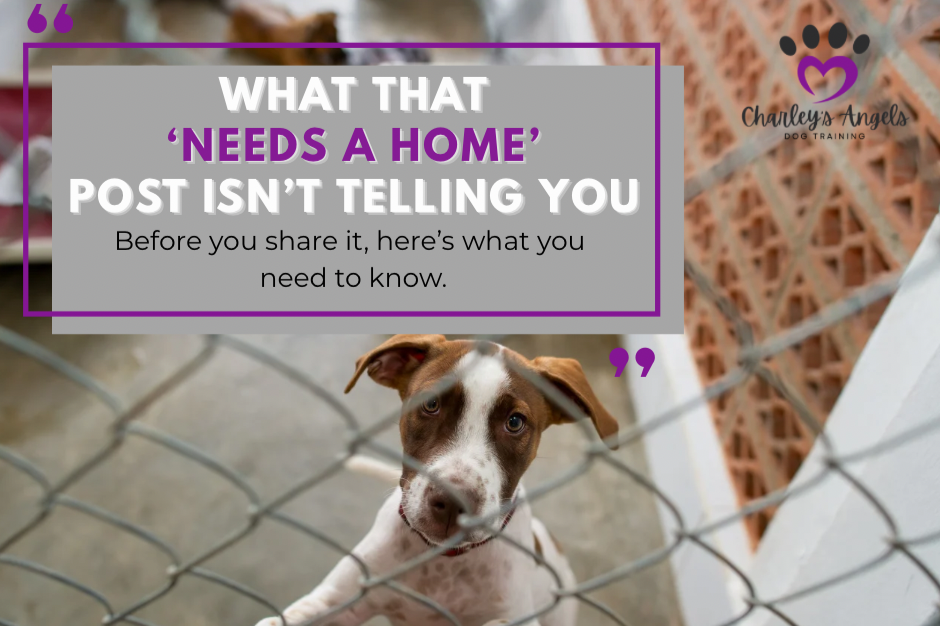
Why everything isn’t always as it seems
We’ve all seen them.
A photo of a dog, a short description and an urgent plea:
“Needs a home by tomorrow.”
“Desperately needs somewhere without children.”
“Will be put to sleep if no one comes forward.”
Posts like these are incredibly hard to scroll past.
They’re emotional. They’re urgent. And they make kind-hearted people feel as though they need to act immediately.
But before you share the post or offer a home, it’s worth stopping for a moment.
Because the information in the post may only be a tiny part of the picture.
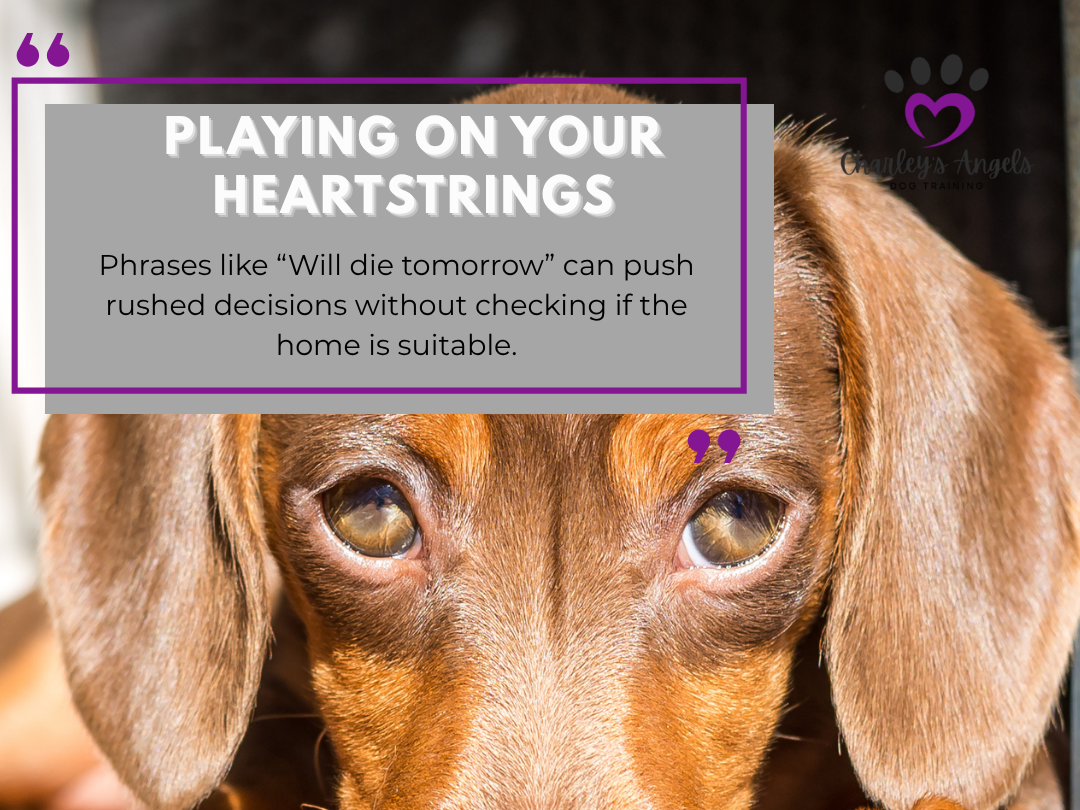
Always ask questions
Why these posts are so persuasive
Urgent rehoming posts often have a few things in common:
very short descriptions
emotional language
limited behavioural history
little information about previous incidents
little detail about what support the new home will receive
That doesn’t automatically mean anyone is being dishonest.
Sometimes the person posting simply doesn’t have much information.
Sometimes they’re under pressure.
Sometimes a rescue is trying to find somewhere quickly.
But whatever the reason, urgency shouldn’t replace proper assessment and matching.
Think of it like an iceberg
What you see in the post is the bit above the surface.
The important information may be underneath.
A phrase that sounds fairly simple can cover a huge range of possible situations.
That’s why I’d always want to ask what the wording actually means in real life.
“Needs a home without children or other dogs”
There can be lots of reasons for this.
The dog may:
be worried around children
have struggled with another dog in the home
guard food, toys or space
become overwhelmed easily
have a bite history
simply not have been properly assessed around children or other dogs
The phrase itself doesn’t tell you which.
So ask.
Has the dog been assessed by a suitably qualified professional?
What exactly has happened?
Was there one incident or a pattern of behaviour?
What were the circumstances?
The answers matter.
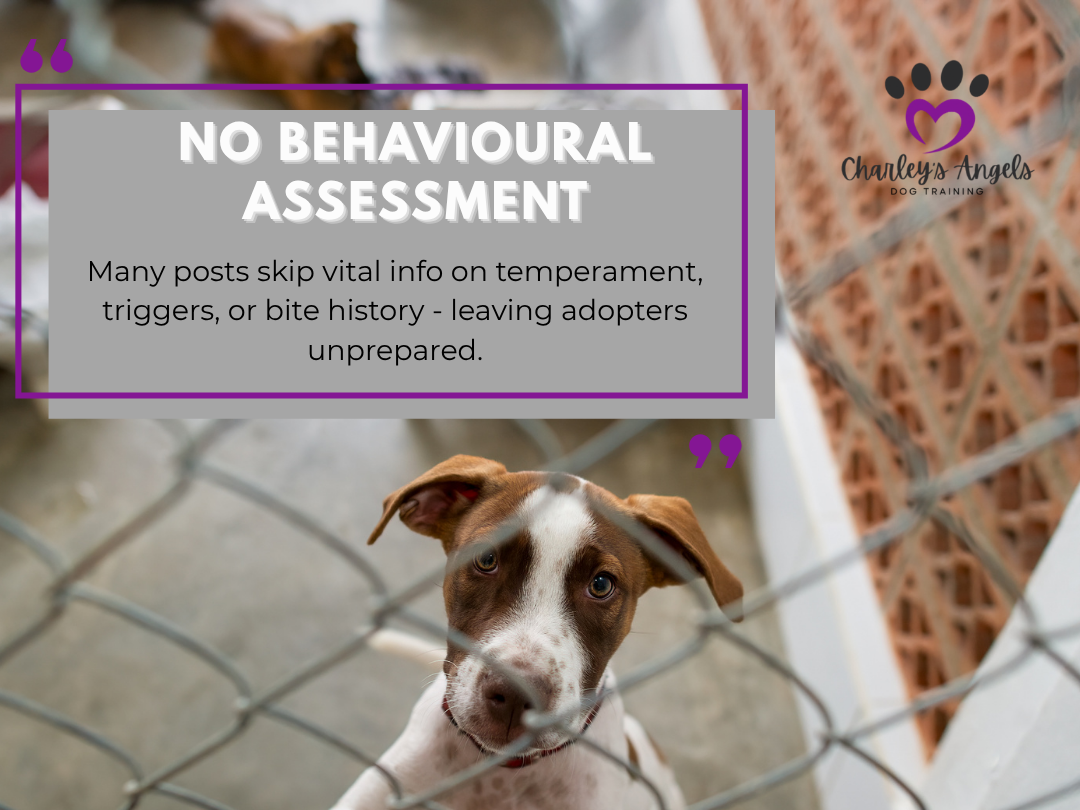
Dogs deserve a professional behaviour assessment before being adopted - and so do the potential adopters
“Needs a special home”
This is another phrase that can mean almost anything.
It might mean the dog needs:
a quiet home
an experienced owner
no visitors
careful management around other dogs
help with separation
muzzle training
secure fencing
behavioural support
restrictions around children
None of those things automatically make a dog unsuitable for adoption.
But they can have a huge impact on day-to-day life.
So rather than accepting the phrase “special home”, ask:
What would living with this dog actually look like?
That’s the information you need.
“Good with most dogs”
Again, ask what that means.
Does the dog:
happily walk alongside other dogs?
greet some dogs but not others?
live with another dog?
become reactive on lead?
cope in open spaces but struggle in confined areas?
tolerate calm dogs but dislike excitable ones?
“Good with most dogs” sounds reassuring, but it isn’t specific enough to help someone make a safe decision.
Context matters.
“Urgent - will be put to sleep”
This is probably the wording most likely to make people act before they’ve had time to think.
And understandably so.
Nobody wants to feel that a dog might die because they didn’t share a post or offer a home.
But this is exactly when more information is needed, not less.
Ask:
Why is euthanasia being considered?
Is it because of behaviour, health, lack of space or something else?
Has the dog been professionally assessed?
What attempts have already been made to find an appropriate placement?
Is the person posting directly involved with the dog?
What information is available about the dog’s history?
An urgent deadline doesn’t remove the need for proper matching.
In fact, it makes it even more important.
What if there’s hardly any behavioural information?
Sometimes a post simply says that the dog’s behaviour is “unknown”.
That can genuinely mean nobody knows.
But it means exactly that:
you don’t know.
It doesn’t mean the dog is safe with children.
It doesn’t mean they can live with other animals.
It doesn’t mean they can be left alone.
It doesn’t mean they have no history of aggression.
It simply means there isn’t enough information to make those assumptions.
If you’re considering taking the dog on, ask what is actually known about:
behaviour in the home
behaviour on walks
interactions with adults
interactions with children
interactions with dogs
interactions with other animals
handling
food and toys
visitors
being left alone
vet handling
previous incidents
The absence of information isn’t reassurance.
It’s a reason to find out more.
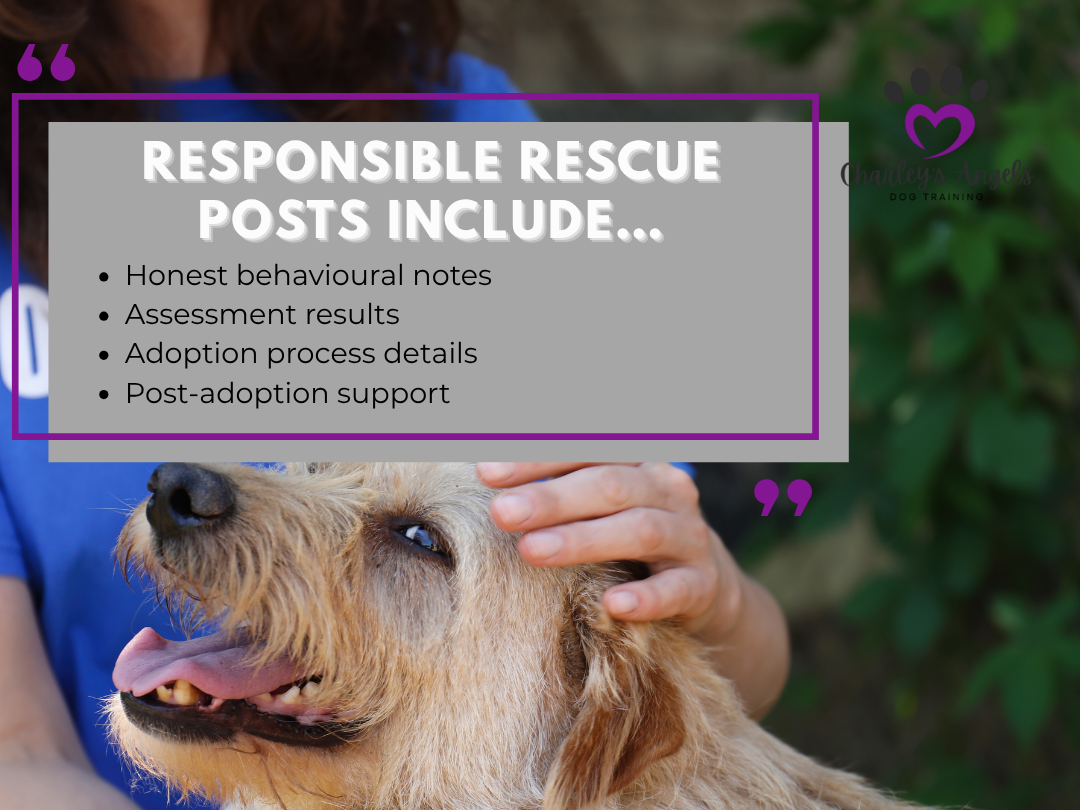
Responsible rehoming includes all these
Before you offer a home
Wanting to help is a good thing.
But compassion and caution can exist at the same time.
Before taking on a dog from an urgent rehoming post, I’d want answers to questions like:
Why is the dog being rehomed?
Has the dog had a proper behavioural assessment?
Is there a written history of their behaviour?
Have there been any bites or other significant incidents?
What environments has the dog lived in?
What are they like around children, dogs and other animals?
Are there any known medical issues?
What management will they need?
What happens if the placement doesn’t work?
Is post-adoption support available?
Who is responsible for the dog if things go wrong?
And if the dog is being rehomed through an organisation, I’d also want to understand their adoption and matching process.
A responsible organisation shouldn’t be worried by sensible questions.
They should want the placement to work just as much as you do.
Sharing posts matters too
Even if you aren’t planning to adopt the dog yourself, think before sharing.
Every share increases the reach of the post.
That can be hugely helpful when the information is accurate and the dog genuinely needs an appropriate home.
But sharing very vague posts without checking them can also amplify incomplete information.
You don’t need to investigate every rescue post on Facebook.
But if something is extremely urgent, highly emotional or gives almost no meaningful information about the dog, it’s reasonable to pause before helping it travel even further.
Why good matching matters
The aim shouldn’t simply be:
Get the dog into any home as quickly as possible.
The goal should be:
Find a home that has a realistic chance of working.
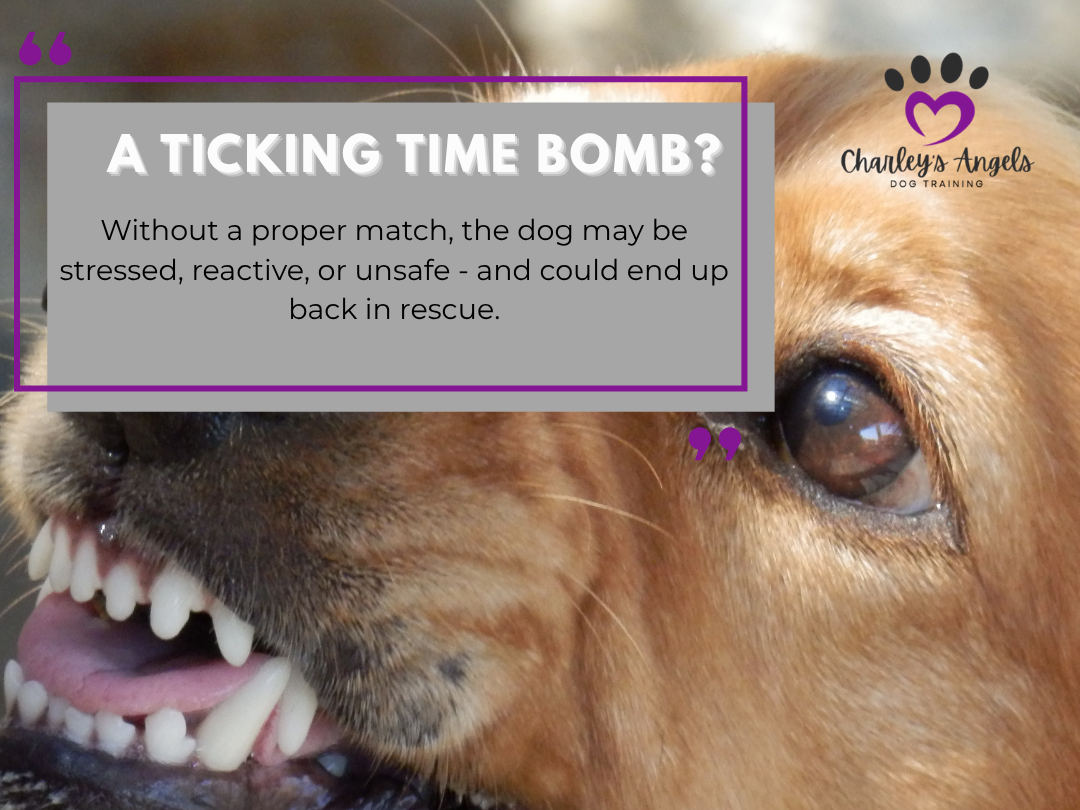
A rushed or unsuitable placement can leave everyone worse off.
The dog may become increasingly stressed.
Behaviour may deteriorate.
The new owner may find themselves in a situation they weren’t prepared or equipped for.
The dog may then be moved again.
And repeated changes of home can make an already difficult situation even harder.
In the worst cases, serious behavioural or safety issues may eventually lead to euthanasia anyway.
Finding somewhere quickly isn’t always the same thing as finding somewhere safely.
Asking questions isn’t being difficult
Sometimes people worry that asking too many questions makes them look suspicious or unhelpful.
It doesn’t.
If you are potentially taking responsibility for an animal for the next ten or fifteen years, you are entitled to understand what you’re taking on.
And asking questions protects the dog too.
A dog with significant needs deserves a home that knows about those needs and genuinely has the ability to meet them.
They don’t benefit from being placed somewhere based purely on emotion and then moved again when reality catches up.
Why it’s important to fact check
Care enough to check
So next time you see an urgent “needs a home” post, you don’t have to ignore it.
You don’t have to assume the worst either.
Just pause.
Before you share it, look at what information is actually there.
Before you offer a home, ask what isn’t there.
Proper assessment, honest information and careful matching give dogs the best chance of finding a safe, stable home that lasts.
Wanting to help is important.
Making sure your help really helps is even more important.